Authors judge a call for abstracts on two things: whether the rules were clear before they submitted, and whether the decision felt fair afterwards. Both are settled before the call opens. This guide follows a call from the first draft of the rules to accepted abstracts appearing in the programme, and notes what evenclo does at each step.
Write the rules before you open the form
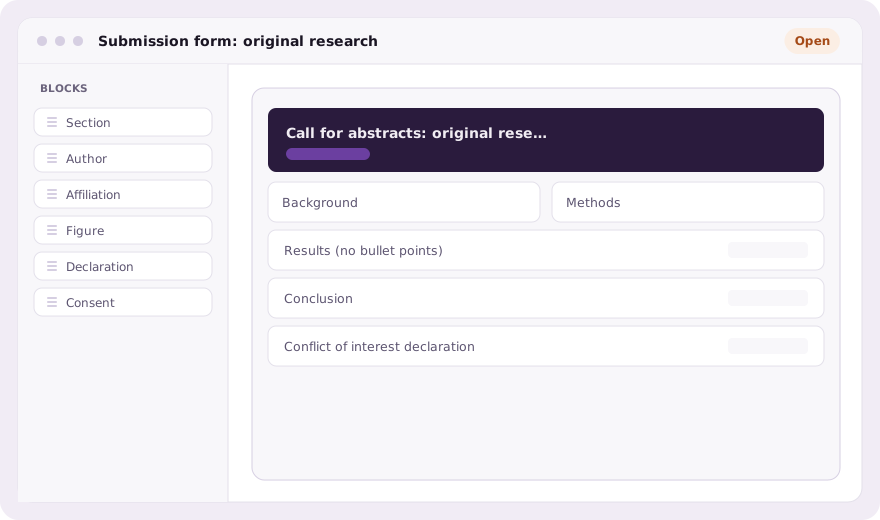
Publish the sections authors must write (for research, usually background, methods, results and conclusion), a limit for each section, the deadline with its time zone and what makes a submission ineligible. State whether review is blinded and, if it is, that names and institutions must not appear in the text. Many committees forbid bullet points and brand drug names, and the call is the place to say so.
If abstracts may be written in Arabic, count characters the way a reader sees them. A simple count treats an Arabic letter with a vowel mark as two characters, so an author within the limit on their screen can be refused by the form. evenclo counts visible characters in both languages, and the counter on the page and the check that accepts the submission use the same code.
Choose a rubric and keep it
Score each abstract on four or five weighted criteria, such as originality, method, results and relevance. Leave a blank criterion out of the total instead of counting it as zero, or a reviewer’s omission becomes the author’s penalty. Some reviewers score everything high and others everything low. Shifting each reviewer’s scores to a common average before ranking corrects that without exaggerating small differences.
Assign reviewers without conflicts
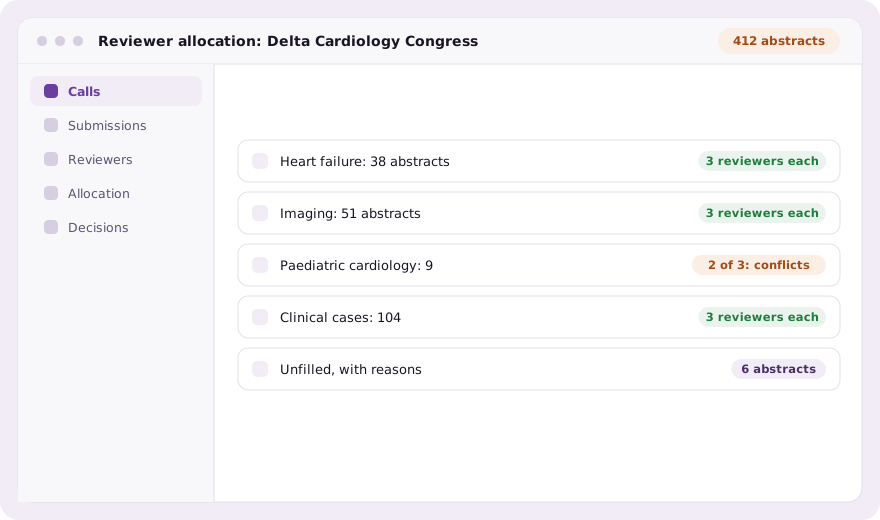
Give each abstract two or three reviewers, never one from the author’s own institution. Assign the abstracts that are hardest to cover first, those in narrow topics with few qualified reviewers, or the easy ones use up the pool. evenclo allocates in that order, refuses a conflict rather than trading it for coverage, and lists what it could not fill and why.
Keep the review blind
The usual failure is a blinded form with identifying files behind it, such as a figure named after the hospital. In evenclo reviewers are never sent author details, file names are replaced, and a scanner flags hospital and institution names in the text before submission. You decide whether that flag blocks the submission or only warns the author.
Decide, then notify on a chosen day
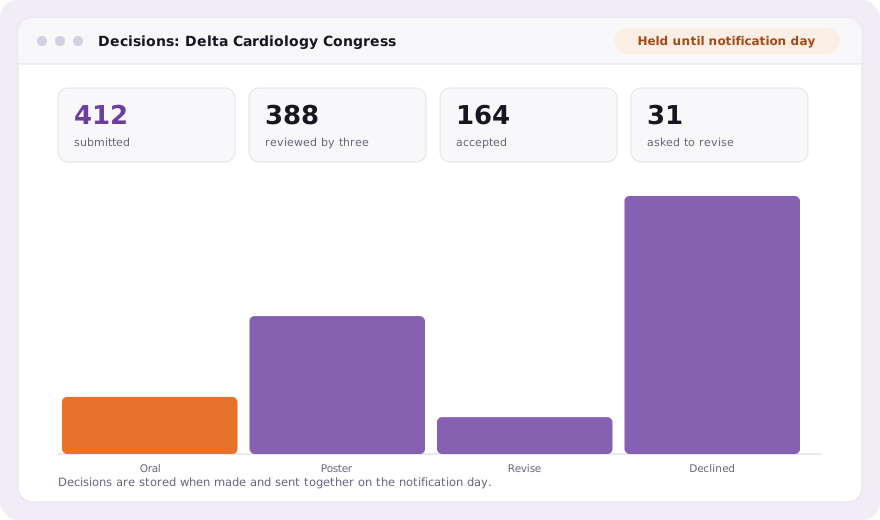
Give the committee the time it needs to decide, then send every decision on a date you announced. Treat revise and resubmit as a second round with the same reviewers. Once authors have been told, accepted abstracts can go into the programme as hidden sessions, and each presenting author is invited to register as a presenter.
Common questions
How many reviewers should each abstract have?
Two or three, none from the author’s own institution. Three lets a committee settle a split score without asking for another review.
Should abstract review be blinded?
For most scientific calls, yes. Keep names and institutions out of the text and the files, and keep author details out of what reviewers are shown.
How should a blank score be treated?
Leave that criterion out of the abstract’s total. Counting it as zero penalises the author for the reviewer’s omission.
Book a demo Thirty minutes, screen shared, in Arabic or English.