The event website is usually the first thing promised and the last thing delivered. It waits on a designer, then on a developer, then on a hosting decision, and it goes live three weeks after the marketing budget started running. Meanwhile registration sits behind a shared form link that says nothing about the event at all.
evenclo builds the site the same way it builds everything else: sections you drag into place, edited in the browser, published the moment you are happy with them. There is no build step, no repository and nobody to book time with.
Sections, not templates
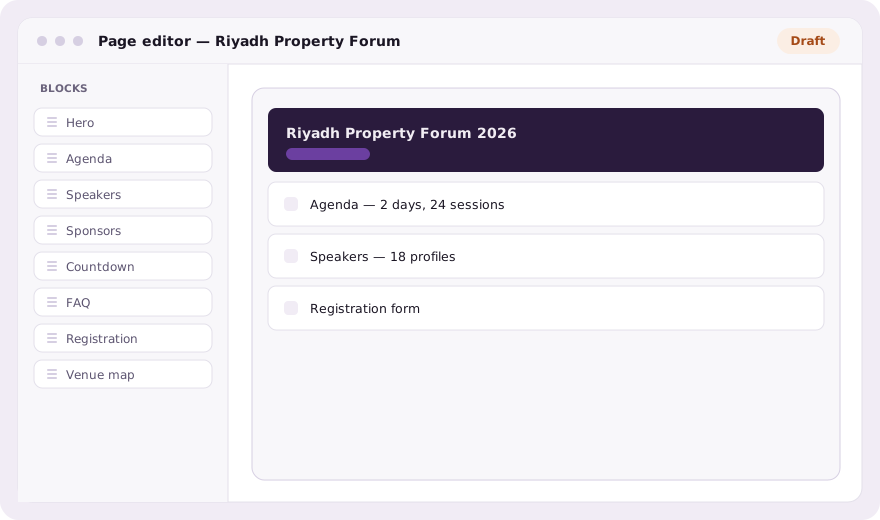
A page is a stack of sections, and each section type knows what it is for: a hero, an agenda pulled from your real programme, a speaker grid, sponsor tiers, a countdown, an FAQ, a venue map. You add the ones your event needs and leave out the ones it does not, rather than deleting placeholder blocks out of a template someone else designed.
One event, as many pages as it needs
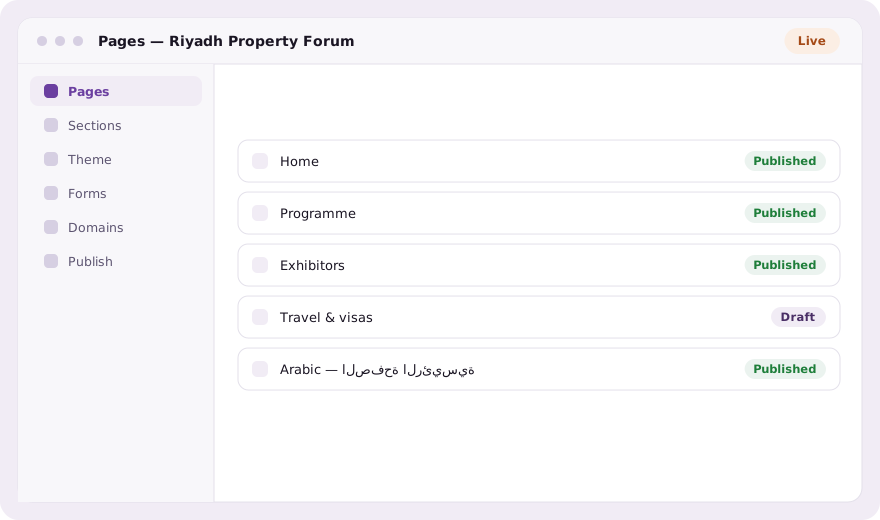
Most events outgrow a single page before they open. You get a multi-page site (a home page, a programme page, an exhibitor page, a travel and visa page), each with its own URL and its own sections, all under the same subdomain and the same theme.
- Your own address at your-event.evenclo.com, resolved per event
- Design tokens set once: typefaces, type scale, container width, hairlines
- Per-section knobs for layout, background, cards, media and decoration
- Custom CSS when a section needs something the knobs do not reach
Arabic is not an afterthought
The builder itself flips. Switch an event to Arabic and the editor, the public pages, the forms and the emails all take the right direction, the right typeface and the right numerals. This is not a translation file laid over an English design. The direction is a property of the page, so a right-to-left hero is laid out right-to-left rather than mirrored badly.
The registration form is part of the page
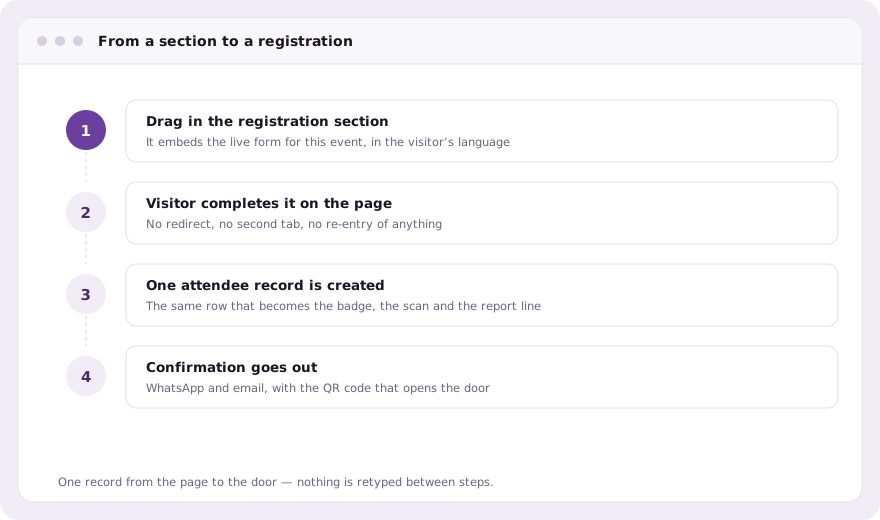
A registration section embeds your real form, not a link to somewhere else. Someone reads the agenda, scrolls, and registers without a page change, and the record that arrives is the same record check-in, badges and reports will read later. Nothing is copied between systems, because there is only one.
Published is a snapshot, not a promise
Publishing writes a snapshot of the page, so editing a live site never half-updates it in front of visitors. Older snapshots are brought up to the current shape when they are read, which means a site published a year ago keeps working without anyone re-saving it.
Common questions
Do I need a developer to build an event website in evenclo?
No. The builder runs in the browser, sections are dragged into place and publishing is a button. There is no build step, no repository and no deployment to arrange.
Can the event site be in Arabic?
Yes, including right-to-left layout, Arabic typefaces and Arabic numerals across pages, forms, badges, emails and reports. The editor flips with it.
Does each event get its own web address?
Yes. Each event resolves at its own subdomain, and the platform keeps a reserved list so an event slug can never collide with a platform address.
Book a demo Thirty minutes, screen shared, in Arabic or English.