Seating is a small feature with a large failure mode. Get it wrong at a gala dinner and two hundred people stand in a ballroom holding a card that says table twelve while somebody hunts for a printed list, and the minister is standing among them.
The reason it usually goes wrong is that the seating plan is a separate document. It is built in a spreadsheet from an attendee list exported on Tuesday, and the four changes made on Thursday exist only in an email.
Seats point at people, not names
A seat is assigned to an attendee record: the same record that registered, that the door will scan and that the badge printed from. Change a guest’s name or swap a delegation, and the seating plan is right because it never held a copy of the name in the first place.
Guests look themselves up
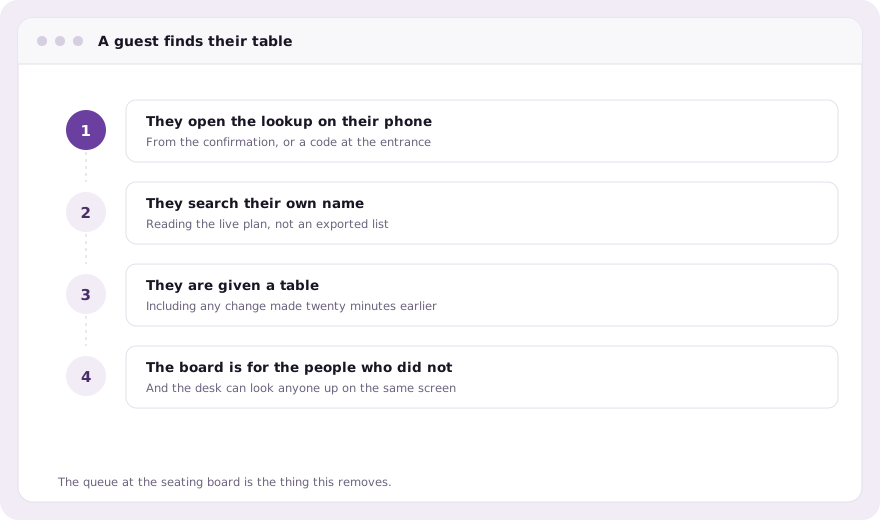
A public lookup lets a guest find their own table from their phone before they reach the door, which removes the queue at the seating board entirely. It reads the live plan, so a change made twenty minutes earlier is the answer they get.
- Assign by seat or by table, whichever the room is run as
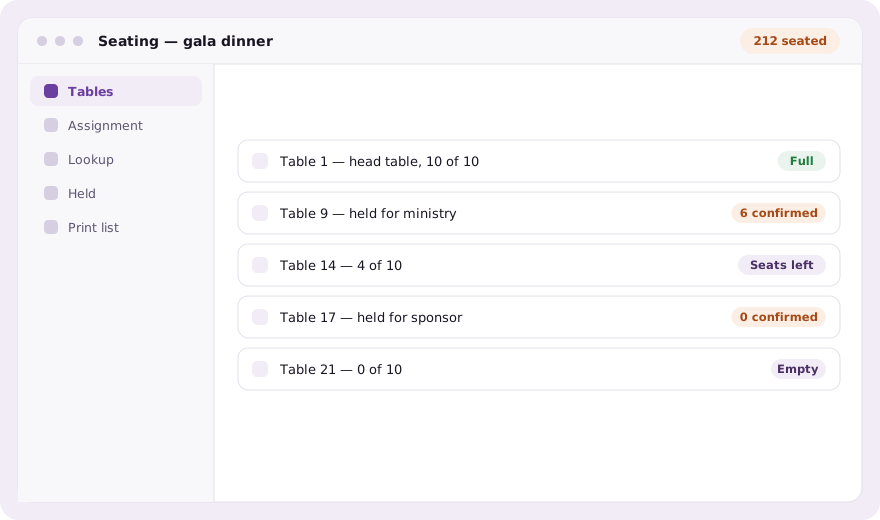
- Held tables for delegations still confirming their numbers
- Public self-service lookup, in Arabic or English
- Admin lookup at the door for the guests who did not check their phone
- Table number printed on the badge, so the credential carries it
Changing it late is the normal case
Plans change on the afternoon. A delegation grows by three, a sponsor sends a chairman nobody expected, a table is dropped because the AV desk needs the space. Because the plan is live and guests read it from their phones, a late change costs one edit rather than a reprint and a redistribution.
Who sits with whom
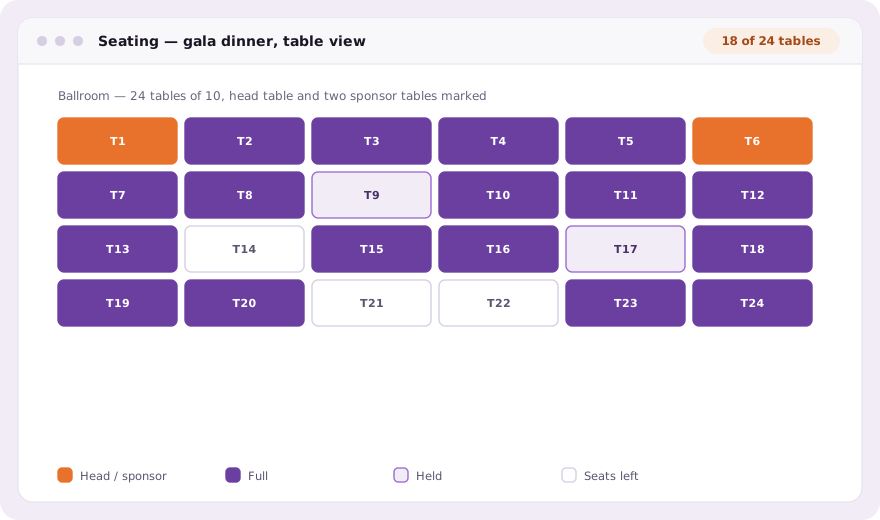
Seating is rarely about capacity. It is about which delegation sits near the stage, which two companies should not share a table and which sponsor was promised a chairman opposite them. Holding tables against groups rather than against individuals is what makes those commitments survivable when six of the twelve names change in the final week.
Seating is where a conference platform is judged by people who never used any other part of it. It is worth having it read the same records as everything else.
Common questions
Can guests look up their own seat?
Yes. A public lookup lets a guest find their table from their phone, reading the live plan rather than an exported list.
Can I change the seating plan on the day?
Yes, and it is the normal case. The plan is live, so a change is one edit rather than a reprint and redistribution.
Can the table number appear on the badge?
Yes. The badge can carry the table number as a merge tag, though the phone lookup remains the source of truth.
Book a demo Thirty minutes, screen shared, in Arabic or English.