The usual arrangement is a form in one place and money in another. Registrations arrive in a spreadsheet, payments arrive in a gateway dashboard, and somebody spends the week before the event matching one list against the other by email address. Every mismatch is a person who turns up believing they paid.
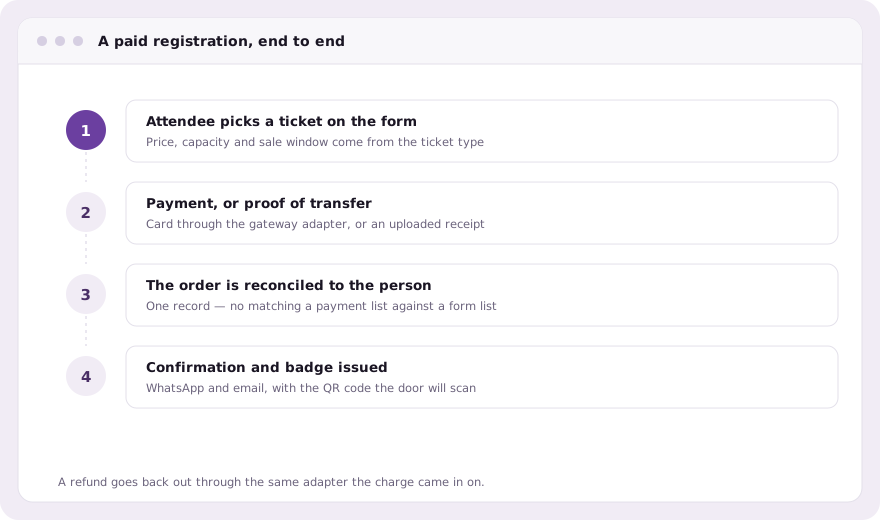
In evenclo the ticket is attached to the registration, and the payment is attached to the ticket. A paid registration arrives as one record with the money already reconciled against it, because it was never two records.
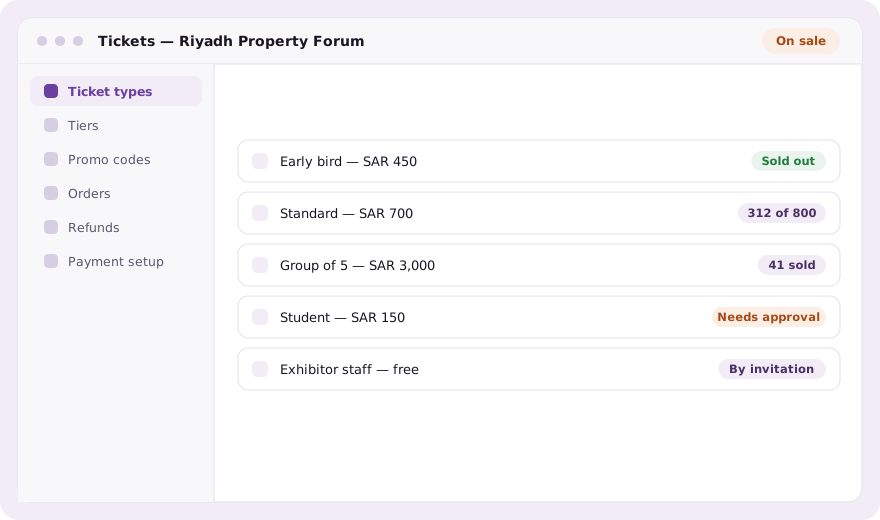
Multiple ticket types, each with its own rules
A ticket type sets its price, its capacity, when it is on sale and which custom registration form it belongs to. Early-bird tiers close on their own. Capacity is enforced at the point of purchase rather than discovered afterwards. Promo codes are attached to the types they are allowed to discount.
Card, or the transfer people actually use
Card payment runs through a provider adapter: Paymob today, with the registry built so a second gateway is a new adapter rather than a rewrite of the checkout. Manual bank transfer is a first-class option, not a fallback: the attendee uploads proof, the registration sits in a pending state, and someone on your side confirms it. In this region that path carries real volume and pretending otherwise loses sales.
Credentials you cannot leak by accident
Gateway credentials are encrypted at rest with AES-256-GCM and masked everywhere they are displayed, so a screenshot of the settings page never exposes a key and no API response returns one in the clear. Refunds go back through the same adapter the charge went out on, which keeps the record of what happened in one place.
Orders you can read without a spreadsheet
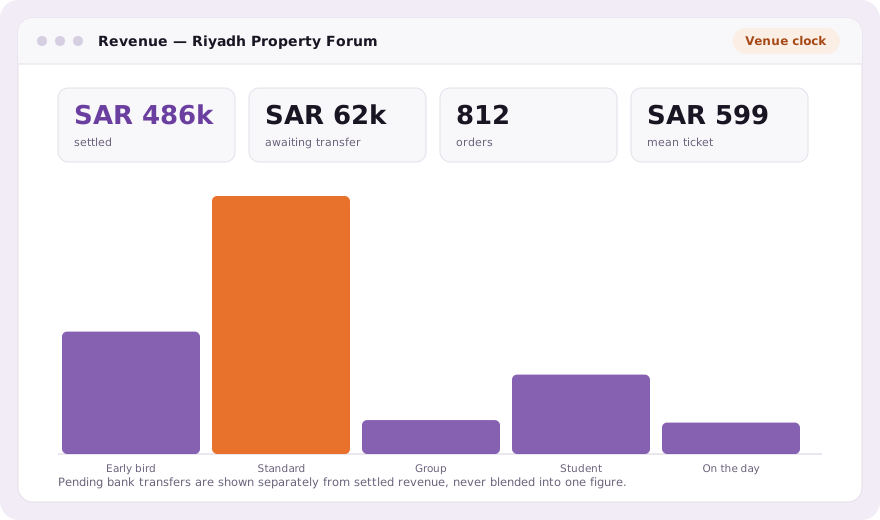
- Every order tied to the attendee record it created
- Pending transfers surfaced as a queue, not buried in a filter
- Promo code usage visible per code
- CSV export of orders for finance, in the venue’s own clock
- A finance role that sees the money and nothing else
Roles matter more here than anywhere else in the product. The finance role reads orders and refunds; the check-in role reads the door. Both are re-checked against the database on every request, so removing someone takes effect immediately rather than whenever their session happens to expire.
Common questions
Which payment gateway does evenclo use?
Paymob is the implemented card provider, behind a common adapter interface. Manual bank transfer with proof upload is supported as a first-class payment method alongside it.
Can attendees pay by bank transfer?
Yes. The attendee uploads proof of transfer, the registration waits in a pending state, and your team confirms it: the same record, just a different payment path.
Can one event sell multiple ticket types?
Yes. An event carries as many ticket types as it needs (early bird, student, VIP, day pass) each with its own price, capacity, sale window and registration questions.
Book a demo Thirty minutes, screen shared, in Arabic or English.